|
|
GPU Debayer
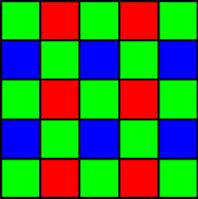
- Converts 8/16-bit raw bayer image from camera or DSLR to 24/48-bit RGB
- Can do that very fast on NVIDIA GPU, much faster than on any CPU
- High quality debayer methods
- Strong moire suppression
- Immediate time measurements for each method
- Makes comparison with etalon images and calculates PSNR/MSE
 What's unique in GPU Debayer software What's unique in GPU Debayer software
- This is, probably, the fastest debayer
- Sophisticated debayer algorithms with high PSNR / SSIM and low artifacts
- Simple to use, fast to work and easy to check
- Testing tool to check quality, timing and performance of debayer algorithms prior to developing heavy loaded services for image processing
- Created by company with years of CUDA experience and world-class achievements
GPU Debayer Software Features
- All Bayer patterns for input data supported (RGGB, BGGR, GBRG, GRBG)
- Mosaic algorithm to prepare bayer image from any 24/48-bit PPM
- Read 8/16-bit input bayer raw image from camera, DSLR or from HDD/SSD/RAID in PGM format
- Output format: 24/48-bit PPM
- Min image resolution 128 × 128 pixels
- Max image resolution up to 16,000 × 16,000 pixels and more
- Debayer quality for the following algorithms:
- HQLI debayer (High Quality Linear Interpolation, window 5×5) – avr. PSNR ~ 36 dB (SSIM ~ 0.965) for Kodak data set
- L7 debayer (High Quality Linear Interpolation, window 7×7) – avr. PSNR ~ 37.1 dB (SSIM ~ 0.971) for Kodak data set
- DFPD debayer (Directional Filtering and a Posteriori Decision, window 11×11) – avr. PSNR ~ 39 dB (SSIM ~ 0.978) for Kodak data set
- MG debayer (Multiple Gradients, window 23×23) – avr. PSNR ~ 40.5 dB for Kodak data set
- Peak performance (GPU computations only, for 4K resolution, 8-bit image, no batch, no streaming) on NVIDIA Quadro P6000:
- HQLI debayer – up to 50 GPix/s
- L7 debayer – up to 45 GPix/s
- DFPD debayer – up to 18 GPix/s
- MG debayer – up to 4 GPix/s
- Strong color moire artifacts suppression
- Quality measurements: MSE and PSNR
- Timing and performance measurements for each algorithm
- Batch mode, pyramid images and tiling for multiple camera systems with realtime image debayer – option
- Command-line demo application for Windows-10 and Linux Ubuntu, L4T
- Compatibility with NVIDIA Jetson Nano, TX2, NX/AGX Xavier, Orin
What else is interesting in Fastvideo GPU Debayer
Fastvideo GPU Debayer is a tool to demonstrate the power of high performance parallel computations on GPU with NVIDIA CUDA technology. It's difficult to imagine how fast could be parallel implementation of GPU debayer for high quality color debayer algorithms.
- We can offer high performance debayer library for your specific needs, particularly for high speed batch debayers
- We are also offering custom software design for combined debayer and JPEG compression on NVIDIA GPUs:
- CUDA Debayer (DFPD algorithm) + JPEG compression (quality=90%, subsampling 4:2:0) for 2K image takes 0.59 ms
- CUDA Debayer (DFPD algorithm) + JPEG compression (quality=90%, subsampling 4:2:0) for 4K image takes 1.37 ms
- We have designed fast image processing SDK on GPU for high speed and high resolution cameras: dark frame subtraction, flat-field correction, white balance, demosaicing, denoising, color correction, tone mapping, image filtering, rotating, cropping, resizing, sharpening, OpenGL rendering and output, jpeg/jpeg2000/bayer/h264/h265/av1 encoding, CUDA FFmpeg integration, streaming, etc.
- The above GPU debayers are constituent parts of FastVCR software for machine vision cameras
Roadmap for further improvements of GPU Debayer
- Super high quality MG debayer algorithm (average PSNR for Kodak data set is 40.5 dB) - done
- Integration of 16-bit high quality MG debayer into FastVCR software - done
- Debayer optimizations for Pascal, Volta, Turing, Ampere, Ada - done
|
